Skip to content
Corporate Home  |  Tyco Electronics Segment Indicator Electronic Components  |  Segments  |  Who We Are
Elo TouchSystems Home
Sign in to Elo e-Services
Visit www.tycoelectronics.com Elo TouchSystems
Email Email  

Young Adults Increasingly Favor Touch Screen Technology

Nearly 90 Percent of Young Americans Ages 18-34 Believe Touch Screens Will Become the Standard Service Industry Medium in the Next Few Years

Strong Popularity of Touch Screens Suggests More Businesses Must Adapt by Integrating the Technology Into Their Service Delivery

Fremont, CA - June 7, 2004 - The vast majority of Americans ages 18-34 expressed extremely positive attitudes towards touch screens and expect a substantial increase in their deployment over the next few years, according to the new Elo TouchSystems In Touch Survey, released today by Elo TouchSystems and conducted by market research firm Penn, Schoen and Berland. 1 Notably, nearly nine in 10 respondents (89 percent), expect touch screens to become the standard way of performing tasks such as checking-in at airports, buying train tickets and self check-out at the supermarket in the near future. As younger Americans' opinions often help predict future trends, the survey results illustrate how their lifestyles are becoming increasingly reliant upon touch screen technology. 

Elo TouchSystems pioneered touch screen technology over 30 years ago, helping to create an entire industry based on touch and simplifying the interface between computers and people. Today, Elo is the market leader in touch screen technology, which has become standard in applications such as airport check-ins. The survey findings also reveal that the technology is rapidly expanding into many other industries such as healthcare (signing in at a hospital or doctor's office), automotive (navigation and stereo systems), and hotel (self check-in). 

The Elo TouchSystems In Touch Survey reveals a significantly high level of usage among Americans ages 18-34, as well as a high comfort level with public touch screen use. For example:

  • Eighty-two percent of respondents have used touch screens at the self check-out of a supermarket or retail store, and seven in 10 respondents have used them at an ATM.
  • A large majority of respondents (85 percent) feel comfortable using touch screens in public.
  • Only 19 percent of respondents say they "rarely" or "never" use touch screens.

Results also revealed that the growing popularity of touch screens comes from their fundamental utility, convenience and time-saving capabilities: 

  • An overwhelming majority, 97 percent of respondents, say touch screen technology is convenient, and 96 percent say touch screens make their lives easier.
  • Nine in 10 of those surveyed say touch screens save time.
It is astonishing to see touch screen technology generate this level of acceptance across an entire age group. The strength of these numbers highlights the enormous impact touch screens are having on how businesses interact with their customers today.

- Mark Mendenhall, President of Elo TouchSystems

Data Indicates that the Role of Touch Screens in the Everyday Lives of Americans Will Become Even More Prominent in the Next Few Years

The survey found that young adults strongly believe touch screen use will increase rapidly in the coming years:

  • Seven in 10 respondents believe it is "very likely" that touch screens will become even more commonplace in the near future.
  • Seventy-six percent believe that they will begin using touch screens more frequently than they ever have. 
  • Ninety-nine percent of respondents believe that touch screen technology will become even more popular over the next few years.
  • Respondents identified a number of potential areas for touch screen application in the future: self-serve stations at the post office, library computerized catalogs, video store check-out, home computers, and household appliances such as dishwashers, stoves and washer/dryers. 

The Growing Popularity of Touch Screens Among Young Americans Suggests the Technology is a Key Tool for Businesses in the Future

According to the survey findings, touch screen technology is rapidly becoming the most preferred method of service, as opposed to customer service agents:

  • Although only a relatively small percentage of service transactions are touch-enabled, almost half (44 percent) of respondents say they prefer touch screens over customer service agents. 
  • When asked to choose between waiting in a short line for a cashier at the supermarket and using a touch screen self check-out, 83 percent chose touch screens. Even without a line for the cashier, more than a third of the respondents (39 percent) chose touch screens.
  • Forty-nine percent of young Americans would rather use a touch screen at a check-out kiosk in an airport than speak with an airline agent.
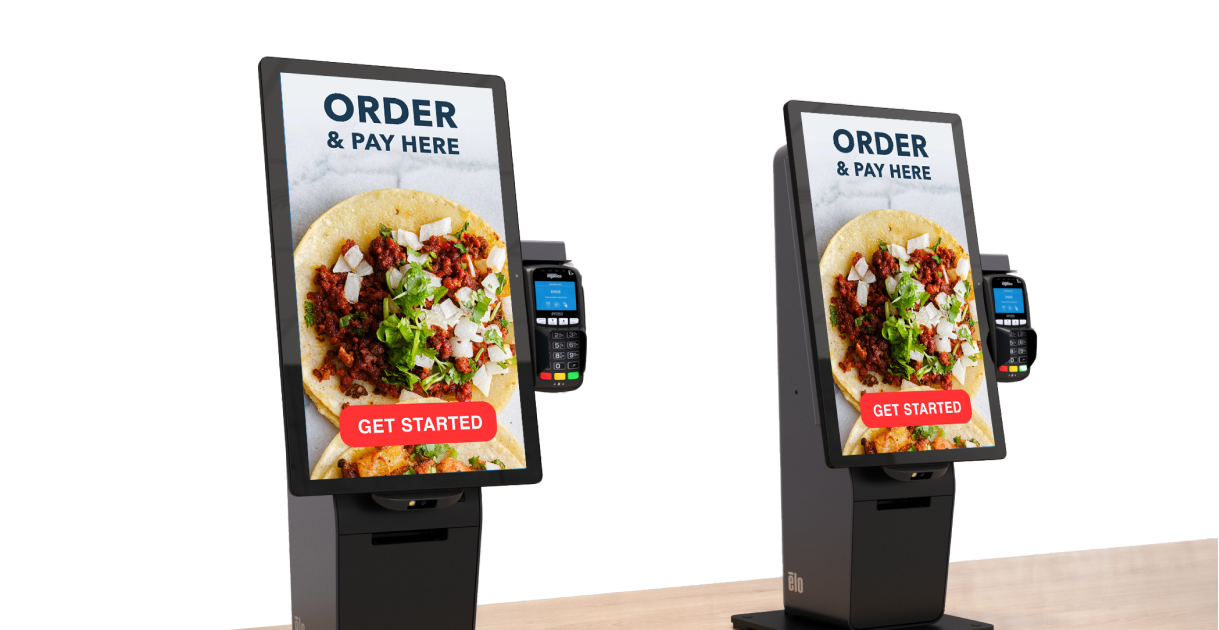
  • A large majority of respondents (86 percent) would rather use touch screens to place orders and pay at fast food restaurants, and 70 percent would rather use touch screens to rent a car.
Although touch screen technology is currently only available for a relatively small percentage of service transactions today, it is amazing that nearly half of the respondents prefer using touch screens over dealing with a customer service agent. As more and more Americans begin to embrace touch screen technology, we believe that businesses across a wide range of industries will begin to integrate this technology wherever they interact with customers. Indeed, these numbers illustrate that consumers are, and will be increasingly demanding the convenience that touch screens offer.

- Mark Mendenhall

Survey Methodology

Between May 10, 2004, and May 16, 2004, Penn, Schoen & Berland conducted approximately 800 interviews among a nationwide sample of individuals ages 18-34, who are Internet users. The survey specifically targeted younger Americans in order to make the study as future-oriented as possible, as this demographic is the best source for predicting and identifying future trends. 

The online survey consisted of a combination of 38 multiple-choice and open-ended questions about touch screen awareness, touch screen issues, touch screen prospects, and touch screen usage. 

The margin of error for this study is +/- 3.4 percent.

1 Penn, Schoen & Berland (www.psbresearch.com) is an innovative strategic market research firm with offices in New York, Washington, D.C., and Denver. PSB has conducted strategic research for multinational Fortune 500 companies and major political campaigns in more than 65 countries around the world.