February 27, 2026
NRF 2026 Channel Debrief: What Elo Partners Need to Know
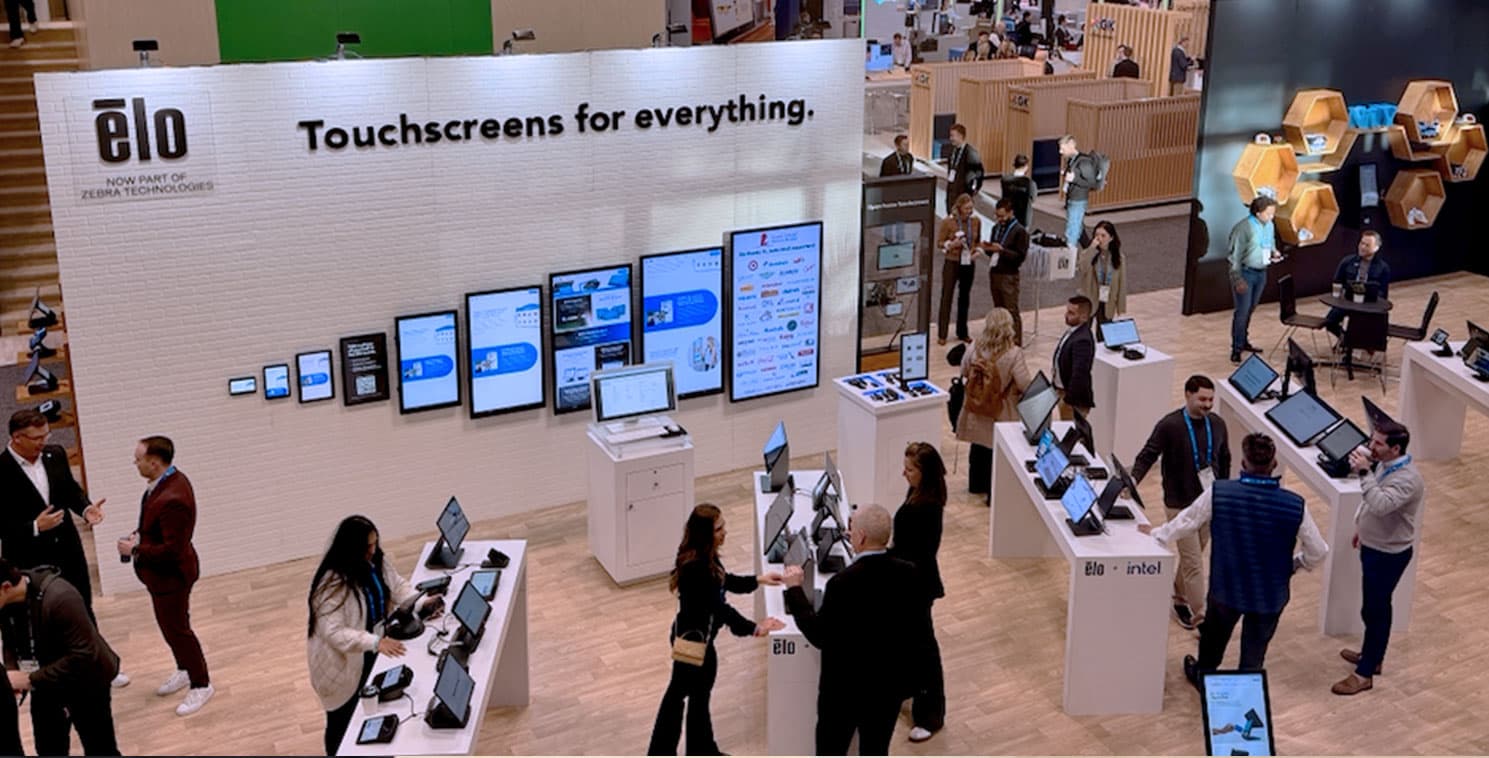
The Elo team was on the ground at NRF 2026 alongside Zebra, meeting with retailers and technology leaders to understand where retail innovation is heading. In our recent NRF 2026 Channel Debrief session, we unpacked the most significant themes from the show and what they signal for 2026. Discover the top 5 key takeaways.
1. AI Is Driving Infrastructure Decisions
AI is being embedded into everyday retail workflows, from self-service and automation to labor optimization and customer engagement. Retailers are no longer asking if they should deploy AI. They are deciding how to scale it.
That shift is directly influencing infrastructure decisions.
Elo supports this transition with platforms designed for AI-enabled environments, including I-Series AiO touch computers, the new Elo Backpack with Intel™, and the Elo AI Edge Pack capable of supporting advanced AI workloads at the edge. These solutions provide the performance and flexibility retailers need as AI moves from pilot to production.
For resellers, this means positioning Elo not simply as display hardware, but as foundational infrastructure for intelligent retail.
2. Edge Compute Is Enabling Real-Time Retail
As AI expands, retailers are pushing AI workloads to the store level to reduce latency, improve resiliency, and enable real-time applications such as inventory recognition and automated checkout.
Elo's compact Backpack solutions and modular all-in-one systems are designed for this shift, delivering mount-anywhere compute power built for continuous retail operation.
This presents a practical growth opportunity. Many existing Elo deployments can be enhanced with edge-ready compute without a full hardware refresh. This enables partners to expand solution value within existing accounts while preserving prior investments.
3. Unified Commerce Is Raising the Bar
Retailers are consolidating POS, self-checkout, mobile checkout, digital signage, and fulfillment into integrated ecosystems. Hardware decisions are now made with long-term system alignment in mind.
Elo's portfolio supports this evolution with configurable I-Series platforms, EloPOS Z30 systems, Elo Pay devices, and commercial-grade touch displays that integrate across retail workflows.
For partners, standardization across store formats is becoming increasingly valuable. Consistent platforms simplify deployment, reduce support complexity, and enable scalable multi-site rollouts.
4. Self-Service and Automation Continue to Expand
Self-checkout and assisted service were prominent themes at NRF. Retailers are scaling programs to improve throughput and address labor pressures.
Elo's Wallaby and Wallaby Pro self-service stands, all-in-one touch computers, and edge-powered kiosk solutions provide flexible building blocks for self-service deployments in grocery, QSR, and specialty retail environments.
Retailers are not piloting these initiatives. They are expanding them.
5. Durability and Lifecycle Stability Matter More Than Ever
As retail environments become more automated, hardware reliability becomes critical. Downtime impacts both operations and customer experience.
Elo's commercial grade durability, extended product lifecycle availability, and consistent Windows and Android platforms support multi-year retail strategies. Standard and extended warranty options further reinforce long-term deployment stability.
Looking Ahead
NRF confirmed that retail modernization is accelerating. AI, edge infrastructure, automation, and unified systems are shaping purchasing decisions. Partners who align early on AI-enabled store modernization will be best positioned to capture growth.
Elo's acquisition by Zebra strengthens our ability to support these initiatives with a broader retail technology portfolio and continued partner enablement.
The opportunity for 2026 is not simply selling devices. It is enabling intelligent store environments built for long-term scalability.
To explore the themes in more detail and identify where they create opportunity in your accounts, watch the full NRF 2026 Channel Debrief session.
Watch the Full Session